Feedback conversations: discuss the work and agree a next step
A useful feedback conversation makes a specific part of the work discussable.
Playbook
Make space for questions, shared attention and useful follow-up.
New to this subject? Start here
A useful feedback conversation makes a specific part of the work discussable.
Playbook
Active listening means giving another person enough attention and room to explain, then checking whether your interpretation matches what they meant.
Method
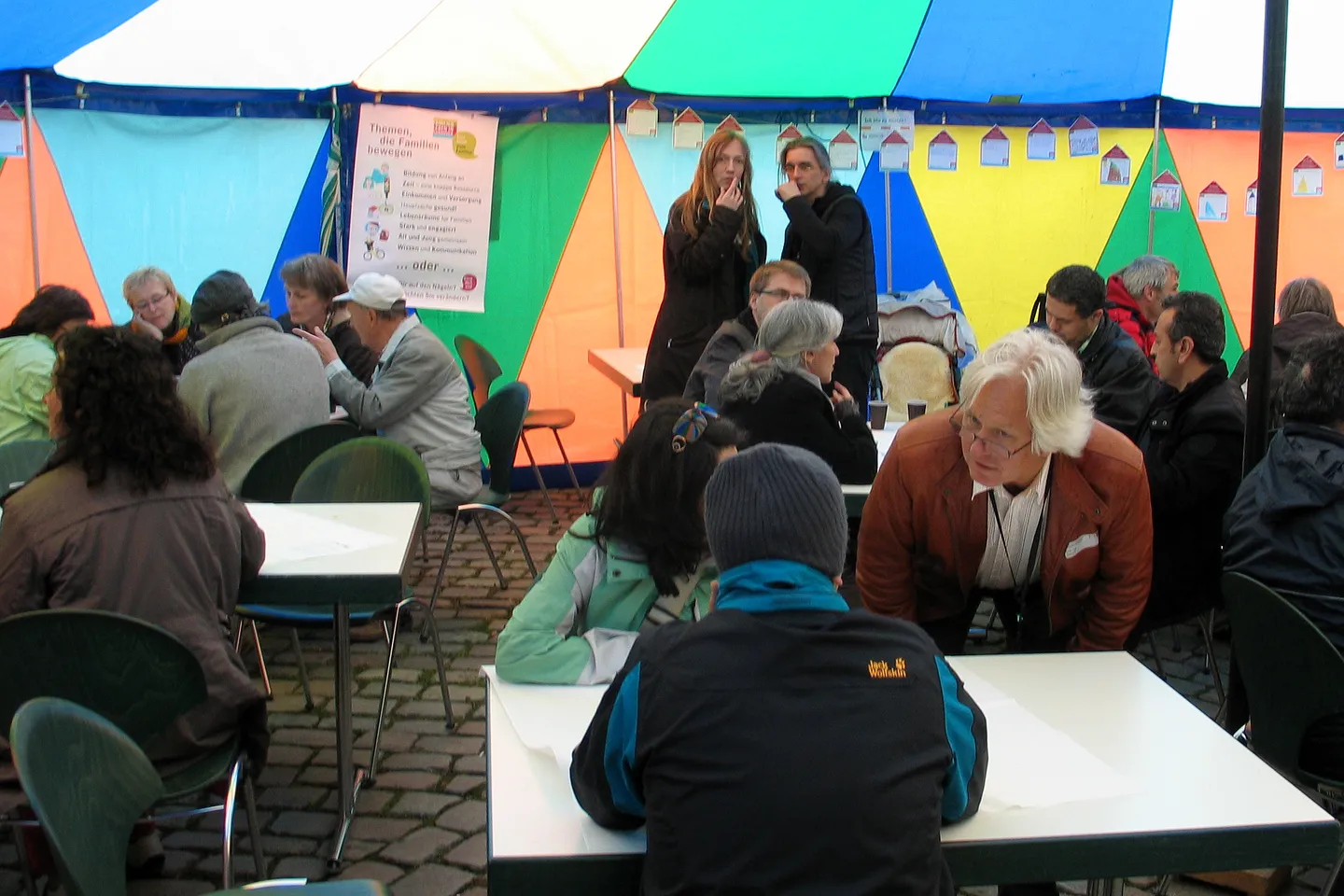
Plan an open Knowledge Café question, small-group conversations and a whole-group reflection, with clear boundaries and a useful route for follow-up.
Method
Build a candid change story around the reason, consequences, uncertainty and next actions, then check it with the people whose work will change.
Playbook
Learn what psychological safety is and is not, what the research supports, and which leader and meeting habits help a team raise questions, mistakes and dissent early.
Foundation guide
Treat pushback as information: sort objections into flaws, losses, workload, history and practical obstacles, check each one, and choose a fair response.
Playbook
Plan World Café questions, rounds, table hosts and a harvest, then use the results honestly: as the views of those present, with clear decision boundaries and follow-up.
Method
Use context, circular and hypothetical questions to explore workplace problems without smuggling in an answer. Includes a worked conversation and clear boundaries.
Method
Use a practical workplace example to distinguish correcting an action from reconsidering the goals, rules and assumptions that guide it.
Comparison
Plan around the questions people need answered, connect messages to real work, and give feedback an owner instead of just another inbox.
Playbook
Plan a useful handover by identifying critical know-how, choosing appropriate transfer methods and checking that the next person can actually use it.
Playbook
Run a participant-led conversation with a visible topic queue, simple voting, time checks, and clear follow-ups.
Method
Try a different area, subtopic or format.
Conversation formats can help distribute attention and make a queue of concerns visible. Use this area when the immediate need is to understand and discuss issues together. Move to a more specific workshop when the group has one clear design or decision task.